← Blog10 min read
PBL Math
A lot of people don't know this about me, but I started teaching as a math teacher and my current job has caused me to go full circle and revisit some of the subjects that I started off with. It's kind of like digging out an old album you listened to in high school and giving it a few plays and remembering how much you loved it. I'm having a lot of fun with it and using what I've learned from Computer Science and teaching students with those skills. If you don't have time to read any more of this post, then read this: you'll be a better teacher if you can bring computational thinking into your classroom as much as possible.
You’re a Math Teacher?
A lot of people don’t know this about me, but I started teaching as a math teacher and my current job has caused me to go full circle and revisit some of the subjects that I started off with. It’s kind of like digging out an old album you listened to in high school and giving it a few plays and remembering how much you loved it. I’m having a lot of fun with it and using what I’ve learned from Computer Science and teaching students with those skills. If you don’t have time to read any more of this post, then read this: you’ll be a better teacher if you can bring computational thinking into your classroom as much as possible.
Calculus - The New Way
Going into this year, I wanted to change up the way students learned calculus. I teach 2 Calculus classes - AP Calculus BC and a non-AP Calculus class. The AP class has a very aggressive pacing to prepare them for the exam, so I figured I shouldn’t try anything too extreme with that class. But, the non-AP course, let’s create something brand new.
After doing a few hours of research online, I realized that no one has published a PBL approach to a Calculus course or curriculum. I was actually shocked to realize that. So when something doesn’t exist, just create it. From my experience working on a team to create a PBL approach to AP Computer Science A, I figured I was ready for this. Each unit will be driven by a central problem - students will learn the math through the unit to solve the problem. Once a week, on Wednesdays, the students will work on their projects in groups. The goal is to solve the problem and create a presentation to the class outlining their process. My goal is to encourage students to take risks, be innovative, and engage in the iterative design process - all in a Calculus class!
Sample Project - Solving the Bridge Problem
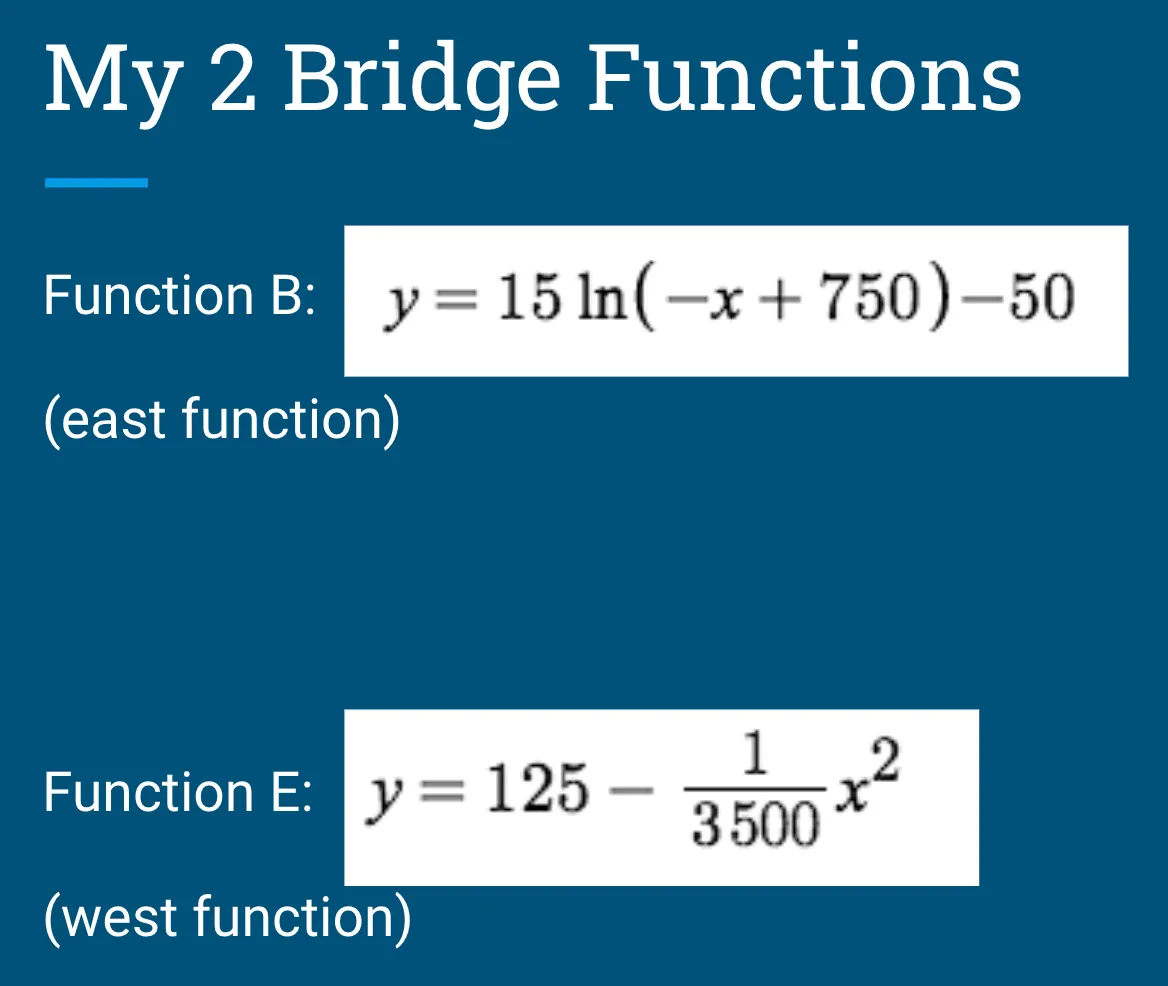
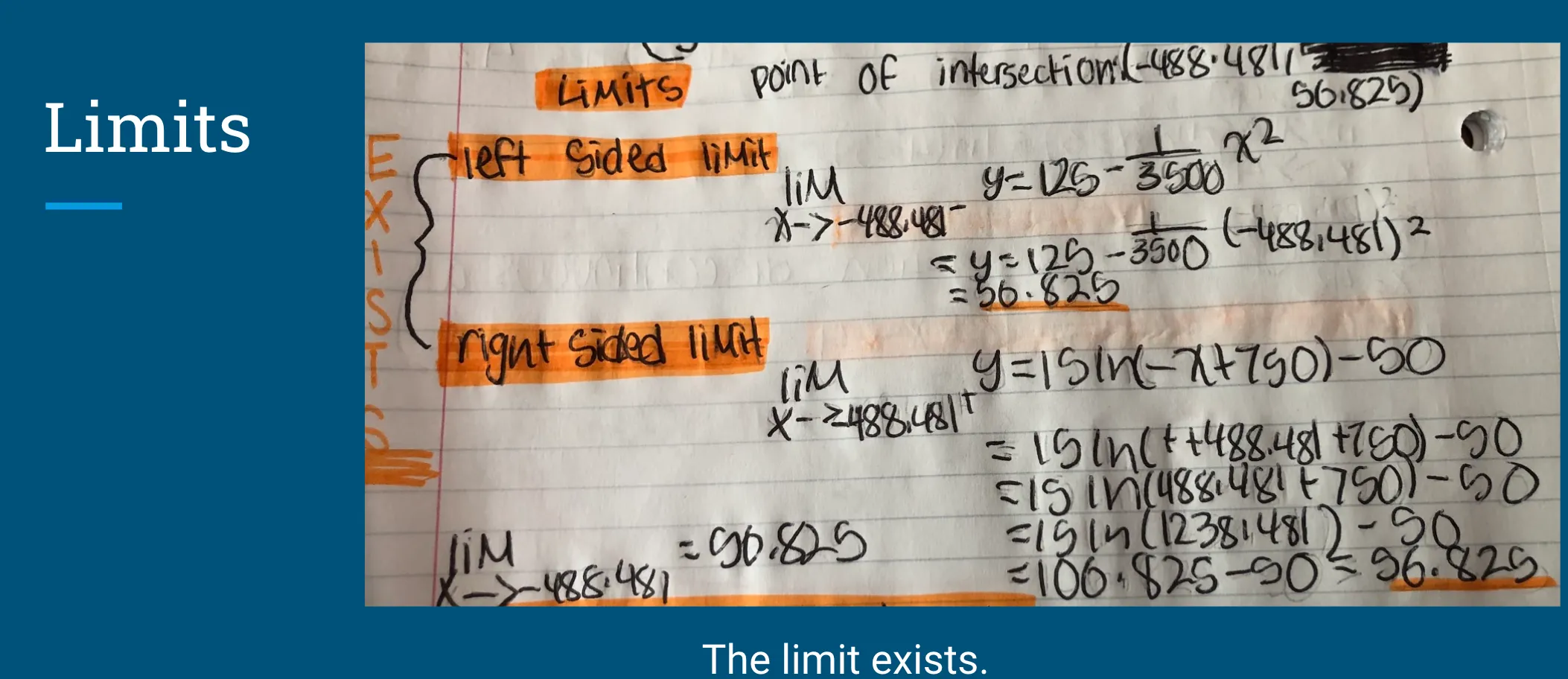
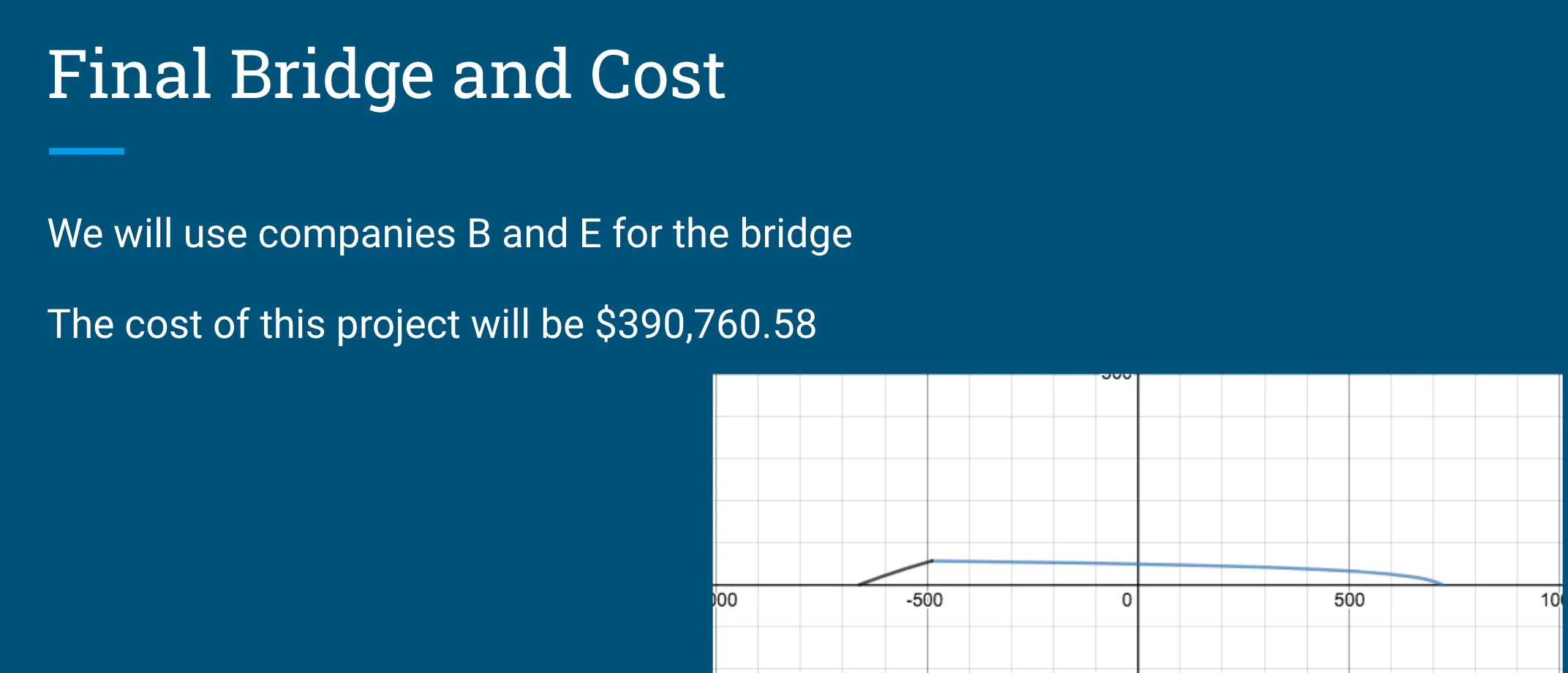
In the first project of the class, students are given multiple functions that represent bridges that have been modeled. They are given the scenario that they work for the city and have to pick from multiple companies to connect their bridges together so that the city can save money. Once they find a mix of bridges that work, then they have to develop a cost analysis to determine the cost of the new bridge. In the process they use limits, continuity, and the Intermediate Value Theorem to justify their solution.
Where Next?
Students will be going through projects on rates of change, related rates, function analysis, and problems that require integrals with the concept of accumulation. By the end of the year, students could create a portfolio of their projects and have something to show to others to demonstrate what they learned in Calculus - a lot better than showing someone a grade on a report card.
Keep coding!
Ryan